

Example of a page with a high-level of rendering resolution for presentation purposes
I have always sketched from a young age. But there’s a difference between a sketch that is useful to yourself and one that communicates a design idea effectively to clients.
7 tips to ensure your ID sketchwork is useful in the design process:
1. CAD Underlays. Use CAD underlays to create dimensionally accurate concepts. No CAD underlays? Use low opacity images of products with similar forms.
2. Resolution. Hand drawn concepts should be be tailored to fit the brief. Think about whether you need many low resolution ideas or some drawn to high level for presentation purposes.
3. Don’t copy & paste. Each concept on a page should resolve all of the design considerations in a way that suits that concept. For example, buttons on 6 different concepts should be 6 different shapes. This gives clients more to choose from.
4. Do not get caught in the quality over quantity trap. If you start drawing too neat it takes longer & you will need to stay neat otherwise subsequent concepts will look less resolved. Start quick and loose and then tighten up once you get an idea for the form factors and what works.
5. Work digitally & use a graphics tablet that allows you to draw directly onto the screen. If you have not been doing this it is a game changer.
6. Draw design features big and bold. If a product has a feature you want to show off draw it largely & clearly on the product or in a call-out bubble. People warm to ideas that they understand, it is your job to make them understand.
7. Use Google images to save time. Some mechanisms are complex to draw. If a Google image communicates what you are trying to say then save time and use an image instead. Communication is the name of the game, the beauty of the page is secondary.
I am a Freelance Industrial Designer with over 12 years Industry experience. I offer quality Industrial Design services solving real world problems with beautiful product solutions. If you have any thoughts on this blog post please feel free to comment below. If you are a student and want advice, drop me an email and let’s discuss your project.
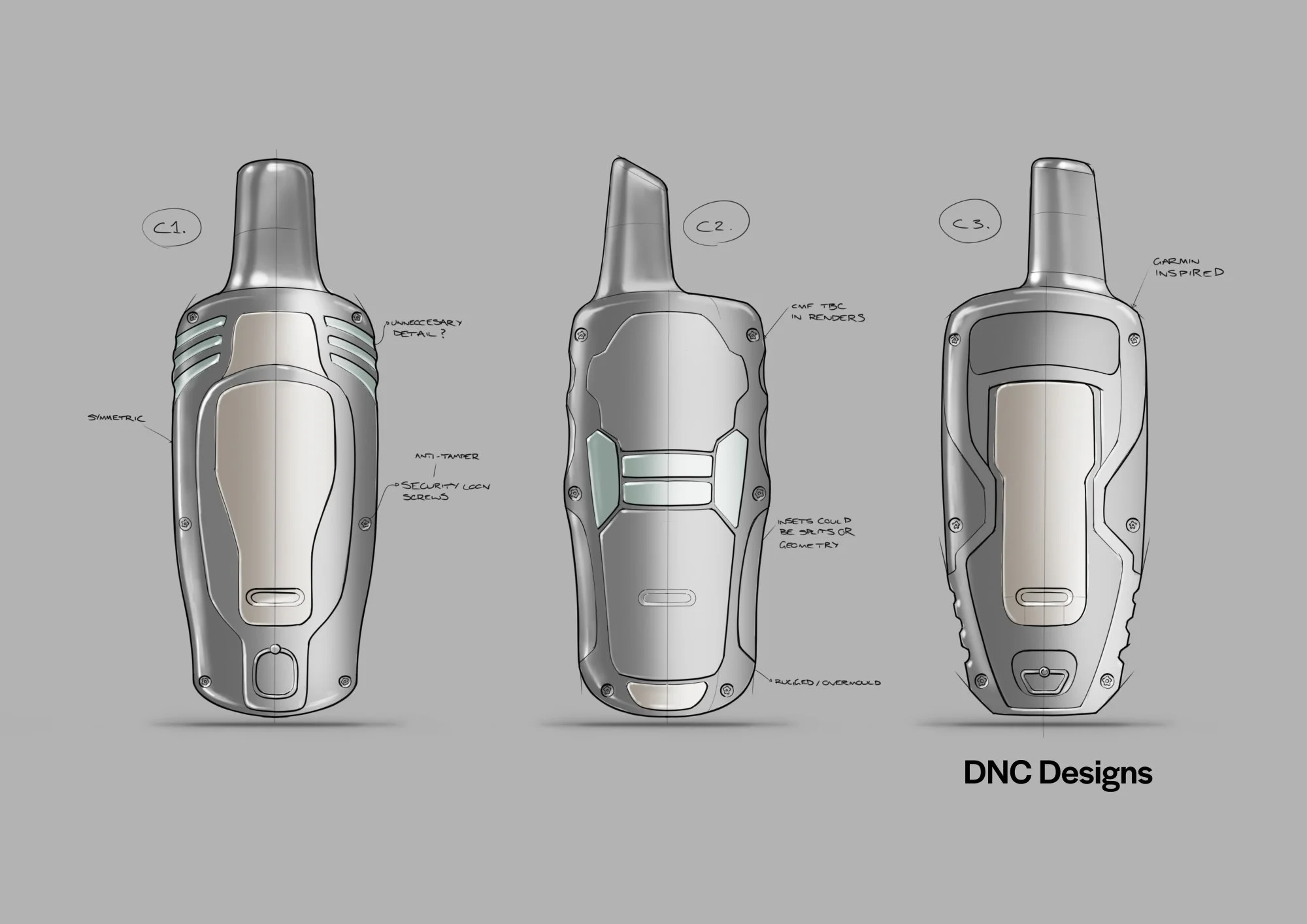
Example of how I would normally present to clients, loosely rendered & annotated concepts shown side by side for fair comparison